


The objective of this workshop is to bring together experts in the field of wave propagation in complex media. It will cover topics ranging from optics/electromagnetism to acoustics, This two days conference is dedicated to one of our colleagues, Fabrice Mortessagne, who will have celebrated his 60th birthday shortly before.
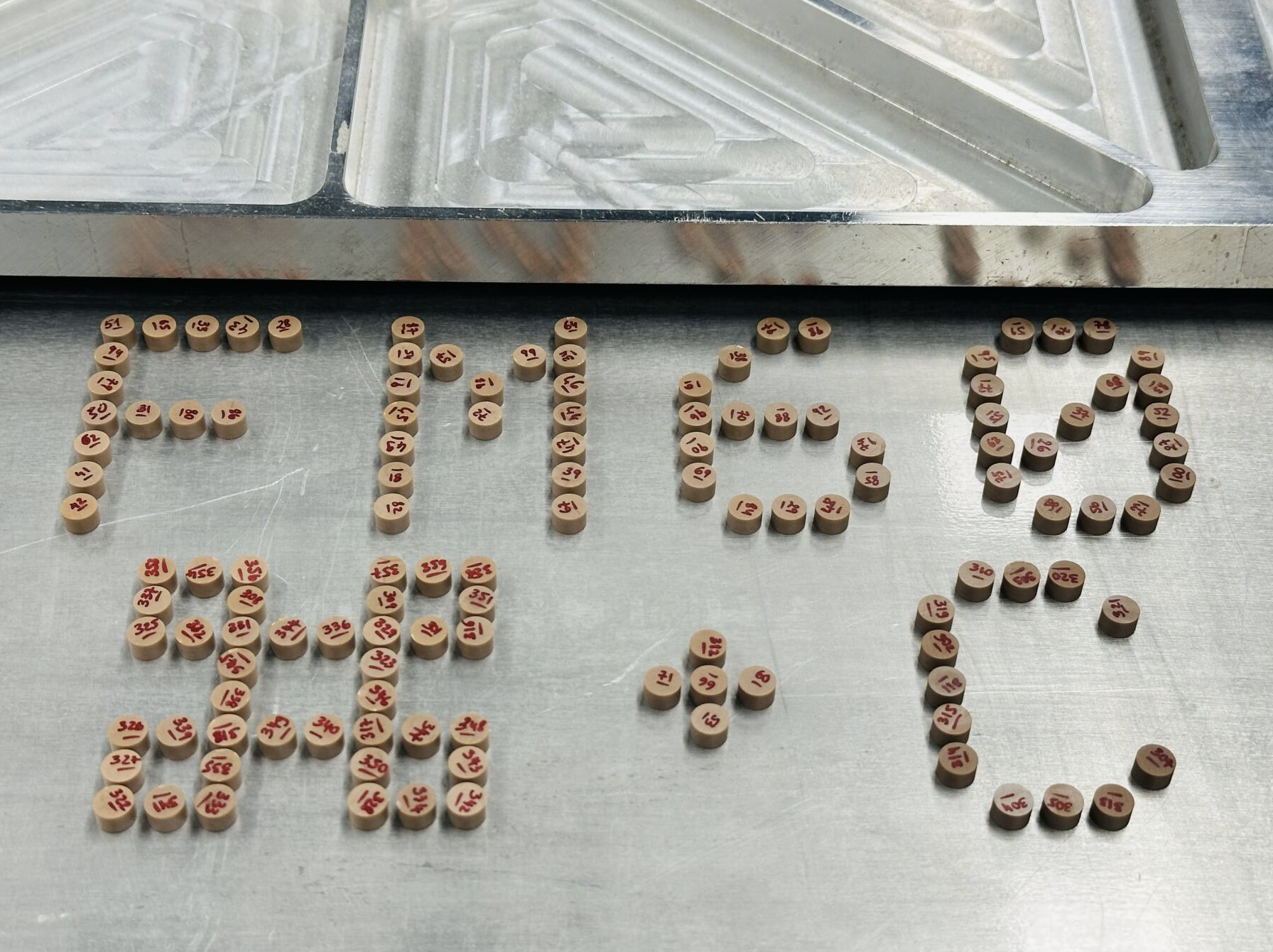
Why ⌘ + C?
POMC (for Propagation des Ondes en Milieux Complexes) is the former name of the group. The meaning of ⌘ + C should be obvious for french Mac users, like Fabrice.(POMC ⟶ POM C ⟶ Apple + C ⟶ ⌘ + C)
Organisation
Participation is free, but registration is required for logistical reasons. Please fill the form here!
Contact: pomc@inphyni.listes.univ-cotedazur.fr
When
Tuesday 20/01/26 and Wednesday 21/01/26
Where
Institut de Physique de Nice
17 rue Julien Lauprêtre
06200 Nice, France
More info here
Speakers
Keynote speaker
- Jacqueline Bloch (C2N, France)
Confirmed invited speakers
- Marcel Filoche (Institut Langevin, France)
- Mathias Fink (Institut Langevin, France)
- Nathalie Giudicelli (IESC, France)
- Jean-Baptiste Gros (Greenerwave, France)
- Christian Miniatura (INPHYNI, France)
- Gilles Montambaux (LPS, France)
- Luis-Alberto Razo-López (Institut Langevin, France)
- Mattis Reisner (Université de Fribourg, Switzerland)
- Jean-Pierre Romagnan (Université Côte d'Azur, France)
- Dmitry Savin (Brunel University London, UK)
- Henning Schomerus (Lancaster University, UK)
- Sergey Skipetrov (LPMMC, France)
- Patrizia Vignolo (INPHYNI, France)
Detailed program
- Tuesday, January 20th
-
- 9:30 - 10:00 – Jean-Pierre Romagnan (Université Côte d'Azur, France)
- 10:00 - 10:30 – Marcel Filoche (Institut Langevin, France)
Spatial structure of low-energy electronic transport in disordered media
In three-dimensional disordered semiconductors or semi-metals, low-energy electronic states are localized up to a mobility edge. When the Fermi level is located in the localized part of the spectrum, transport is achieved by hopping between these localized states. We will present a unified transport and localization framework for disordered quantum systems which replaces empirical hopping assumptions with a geometry-driven description. In this approach, localized states, energies, and couplings emerge from an effective potential derived from the disorder, and charge transport follows geodesic paths of an Agmon metric. This framework reformulates classical theories such as Miller–Abrahams and Mott–Berezinskii as limiting cases while extending their validity to strongly inhomogeneous media and energies near the mobility edge. Finally, we will introduce possible extensions of this approach to tight-binding lattices, two-dimensional materials, and magnetic systems. - 10:30 - 10:45 – Coffee break
- 10:45 - 11:15 – Christian Miniatura (INPHYNI, France)
Symmetry-Induced Logarithmic Relaxation in the Quantum Kicked Rotor
Logarithmically slow relaxation is a hallmark of systems with complex energy landscapes or constrained dynamics; in the condensed-matter context such behaviors often reflect the presence of many competing time scales and have been discussed extensively in the theory of glasses and trap models. In disordered quantum systems, the role of symmetries is comparably central: the presence or absence of time-reversal, spin-rotation, or other symmetries determines the appropriate universality class to which the system belongs and thereby controls whether and how Anderson transitions or weak-localization phenomena occur. A striking example is the symplectic class, where spin–orbit coupling yields weak antilocalization and allows a metal–insulator transition even in two dimensions, in contrast with the orthogonal class where there is no transition.
In this talk, I will explore the impact of different, simpler symmetry constraints (like parity) in the paradigmatic context of dynamical localization as realized by the quantum kicked rotor. - 11:15 - 11:45 – Jean-Baptiste Gros (Greenerwave, France)
Smart Materials to Control Electromagnetic Waves: From Academic Research to Industrial Products for Connectivity and Detection Applications
Through the example of Greenerwave, I will show how a deeptech startup—born within an academic institute—can turn an innovative technological concept into a first industrial product. I will share both our successes and the challenges we encountered along the way. I also aim to illustrate how R&D in deeptech often involves tackling compelling physics problems, sometimes in unexpected areas, and how a company’s academic DNA can be a real asset in addressing them with creativity. - 11:45 - 12:15 – Dmitry Savin (Brunel University London, UK)
Eigenmode Statistics and Universality in Complex Symmetric Random Matrices
Non-Hermitian random matrices with spectral properties beyond the standard Ginibre ensembles have recently emerged in modelling dissipative quantum many-body systems and non-ergodic wave transport in complex media. In this talk, we focus on the analytically challenging AI$^\dag$ symmetry class of complex symmetric random matrices. For the Gaussian case, we present new exact results for the joint distribution of a complex eigenvalue and its eigenvector for arbitrary matrix size $N\ge2$. This allows a complete characterisation of eigenmode fluctuations across the entire complex plane for finite $N$ as well as in the large-$N$ limit. Remarkably, at the spectral edge, both eigenvalue and eigenvector non-orthogonality statistics exhibit limiting behaviour that deviates from the Ginibre universality class. This behaviour is expected to be universal, characterising physical systems within this symmetry class, as further supported by numerical evidence. [Based on a joint work with G Akemann and Y Fyodorov: arXiv:2511.21643.] - 12:15 - 2:30 – Lunch & discussions
- 2:30 - 3:00 – Luis-Alberto Razo-López (Institut Langevin, France)
Phase imaging using spatiotemporal wavefront shaping
Complex speckle patterns serve as unique fingerprints of random optical fields generated by microscopic aberrations within scattering media. The phase of these fields contains isolated zeros—optical vortices—each carrying a topological charge of ±1. Using a spatiotemporal wavefront-shaping approach, we introduce a phase-retrieval algorithm that determines the topological charges of these vortices from intensity-only measurements. This method enables full characterization of the singularity structure of speckle fields without requiring interferometric detection. - 3:00 - 3:15 – Coffee break
- 3:15 - 4:15 – INPHYNI Colloquium Jacqueline BLOCH (C2N, France)
Synthetic matter with light trapped in semiconductor microcavities
The extraordinary properties of crystalline materials, their ability to conduct electricity, become superconductive, or exhibit certain magnetic effects, are due to the physics of quantum particles (electrons) moving in a periodic potential created by the atoms of the crystal and interacting with each other and with the vibrations of the crystal. Can we draw inspiration from this condensed matter physics to modify the properties of light? Can we go beyond what exists in natural materials by using light?
In this presentation, I will describe how our team at C2N is answering these questions by trapping light in optical cavities (“photonic atoms”), assembled in periodic lattices that form “photonic crystals.” In these lattices, photons “jump” from one cavity to another, just as electrons do from one atom to another in solids. All the physics can be revealed by analyzing the light that emerges from these lattices. We will take the example of a cavity ring that simulates a benzene molecule or a honeycomb array that simulates graphene. Finally, we will describe how light can even become superfluid and propagate as in a superconducting material. This research is of great fundamental interest, but also leads to innovative photonic devices with very promising applications. - 4:30 - 4:50 – Sergey Skipetrov (LPMMC, France)
Anderson localization: in memory of Bart Van Tiggelen - 4:50 - 5:10 – Nathalie Giudicelli (IESC, France)
Waves in Cargèse - 5:15 - 6:30 – Apero at INPHYNI
- 7:00 - ??? – Dinner party (invited members only)
- Wednesday, January 21th
-
- 9:45 - 10:15 – Henning Schomerus (Lancaster University, UK)
Non-Hermitian phases of matter - from an idea to reality
Gain and loss allow to equip systems with topological properties that transcended those of traditional fermionic matter. I recount some stops on the way to develop these concepts, including groundbreaking experiments carried out in Nice, and link these to present efforts aiming to further elevate topological notions to dynamical and nonlinear settings. - 10:15 - 10:45 – Sergey Skipetrov (LPMMC, France)
Dynamics of wave transport by helical edge states
Topologically nontrivial band structure of a material may give rise to special states that are confined to the material’s boundary and protected against disorder and scattering. Quantum spin Hall effect (QSHE) is a paradigmatic example of phenomenon in which such states appear in the presence of time-reversal symmetry in two dimensions. The spatial structure of these helical edge states has been largely studied, but their dynamic properties are much less understood. We design a microwave experiment mimicking QSHE and explore the spatiotemporal dynamics of unidirectional transport of optical angular momentum (or pseudospin) by edge states. Pseudospin-polarized signal propagation is shown to be immune to scattering by defects introduced along the edge. The breakdown of the pseudospin concept near sample edges opens a spectral gap between edge modes and allows for controlling the direction of wave emission even when the emitting antenna is not pseudospin-selective.
L.A. Razo López, P. Wulles, G.J. Aubry, S.E. Skipetrov, and F. Mortessagne, Phys. Rev. A 112, L051502 (2025) - 10:45 - 11:15 – Coffee break
- 11:15 - 11:45 – Mathias Fink (Institut Langevin, France)
From Time-Reversal Mirror to Unruh Effect
I will first describe the analogy between the physics of a time-reversal experiment in a complex media and the cross-correlation measurement of signals transmitted by a random noise source in such media. This leads to the emergence of the Green’s function from the signal cross correlation that can be used to image the environment, Then, I will discuss the point of view of a moving observer recording such random signal. I will emphasize the difference between an observer moving at constant speed and an observer in accelerated motion. I will show the peculiar properties of a Rindler-trajectory and the connection with the Unruh effect which allows a moving Rindler observer to perceive their environment. - 11:45 - 12:15 – Gilles Montambaux (LPS, France)
Ramanujan, Landau and Casimir divergent series: a physicist approach
It is a popular paradoxical exercise to show that the infinite sum of positive integer numbers is equal to -1/12, sometimes called the Ramanujan sum. This result is actually well-defined in a proper mathematical sense. Here we propose a qualitative approach, much like that of a physicist, to show how the value -1/12 can make sense and, in fact, appears in certain physical quantities where this type of summation is involved. At the light of two physical examples, taken respectively from condensed matter -- the Landau diamagnetism -- and quantum electrodynamics -- the Casimir effect -- that illustrate this strange sum, we present a systematic way to extract this Ramanujan term from the infinity. In both examples, the ''infinite'' appears to be a vacuum energy and the Ramanujan sum is revealed by a response function to an external parameter. - 12:15 - 2:00 – Lunch & discussions
- 2:00 - 2:30 – Mattis Reisner (Université de Fribourg, Switzerland)
Structural colour from disordered scattering media
Structural colours arise from the interaction of light with materials structured on the micro or nanoscale. Owing to their availability, low cost, and broad range of tunable parameters, amorphous assemblies of monodisperse spherical particles are among the most promising systems, that are easily fabricated. Light propagation in these structures is governed by multiple scattering, where short range order and interference effects are highly important. Here, we model light propagation using an extended photon diffusion approach. In addition to a wavelength dependent transport mean free path $l^*$, we include absorption and account for the scattering anisotropy parameter $g$, which enables an effective description of short photon paths. The interplay between scattering and absorption then leads to the appearance of colour. To test the model, we experimentally extract the absorption length $l_a$ and transport mean free path $l^*$ from coherent backscattering cone measurements on dense packings of monodisperse silica particles mixed with controlled amounts of a broadband absorber (carbon black). Co and cross polarized reflection spectra show good agreement with model predictions using g as the only fit parameter. Because the parameter g is fundamentally bounded, the model provides an estimate of the upper bound on achievable structural colours, not only for spherical particle packings but for disordered photonic structures in general. - 2:30 - 3:00 – Patrizia Vignolo (INPHYNI, France)
Energy landscape in two-dimensional Penrose-tiled quasicrystal
Quasicrystals can be modeled with a collection of polygons (tiles) that cover the whole plane, so that each pattern (a sub-collection of tiles) appears up to translation with a positive frequency, but the tiling is not periodic. The frequency of presence of each pattern determines the spectrum of the system, and this is the subject of the gap labelling theory. Using a microwave realization of a tight-binding Penrose-tiled quasicrystal, we measured the gap labelling and the spatial energy distribution of each eigenstate. The energy-scaling behaviour of the hopping terms in this particular system, allowed us to identify the main patterns that determine the first hierarchical structure of the spectrum . Our energy-scaling analysis enabled us not only a straightforward interpretation of the gap labelling but also a full understanding of the wavefunction behaviour observed in each band. - 3:00 - 3:15 – Concluding remarks
- 9:45 - 10:15 – Henning Schomerus (Lancaster University, UK)